






CASH ON COLLECTION PLEASE NOTE: NO PAYPAL A/C
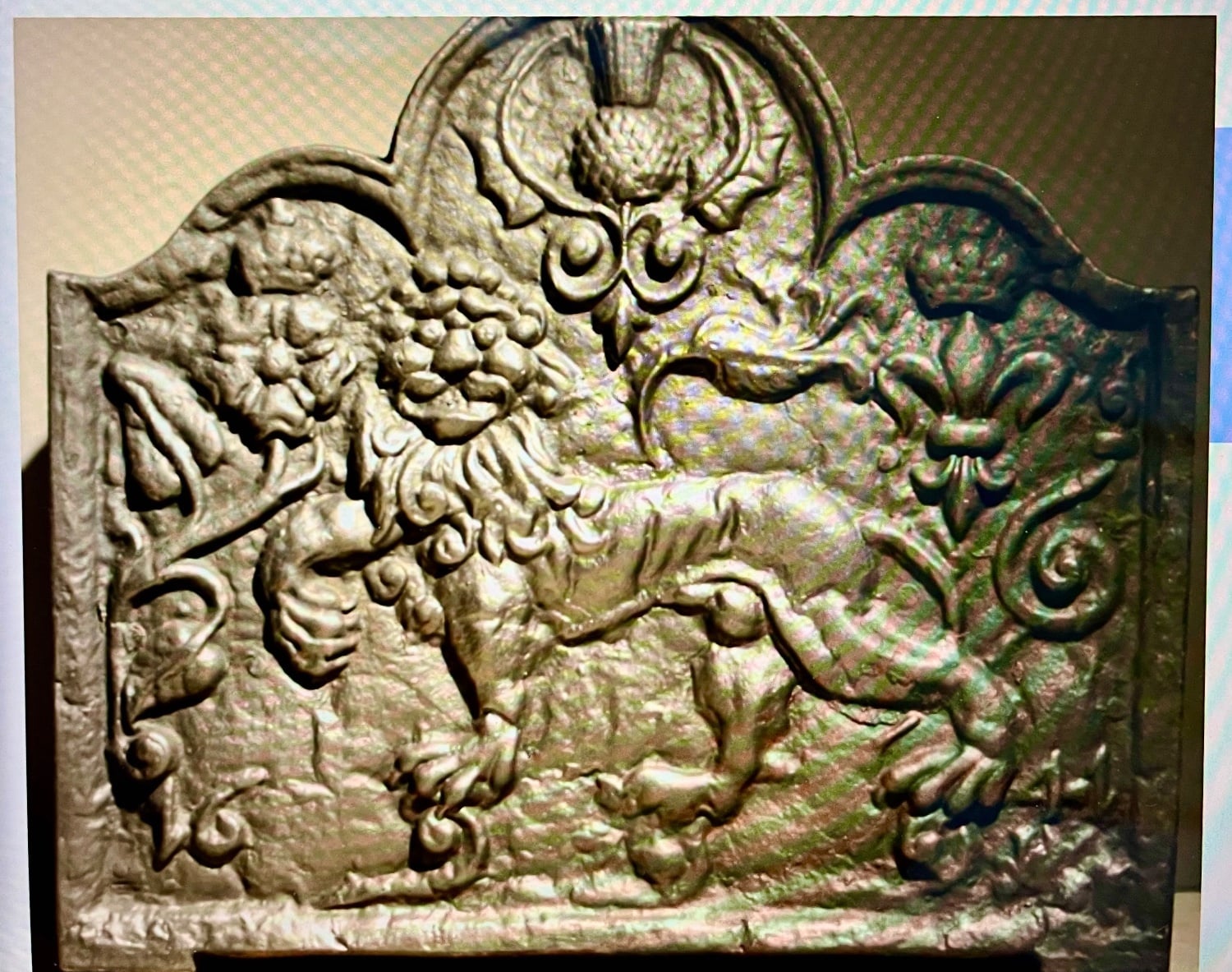
Early 20th Century, casting after a mid 17th century pattern
This very very heavy solid iron casting will require three persons to manoeuvre , has been sealed and burnished with black grate polish on the reliefs to protect the casting reliefs and primed and sealed on the reverse
Dimensions are: Width: 75cm / 29.50''
Height: 66cm / 26''
Depth: 3cm / 1.25’'
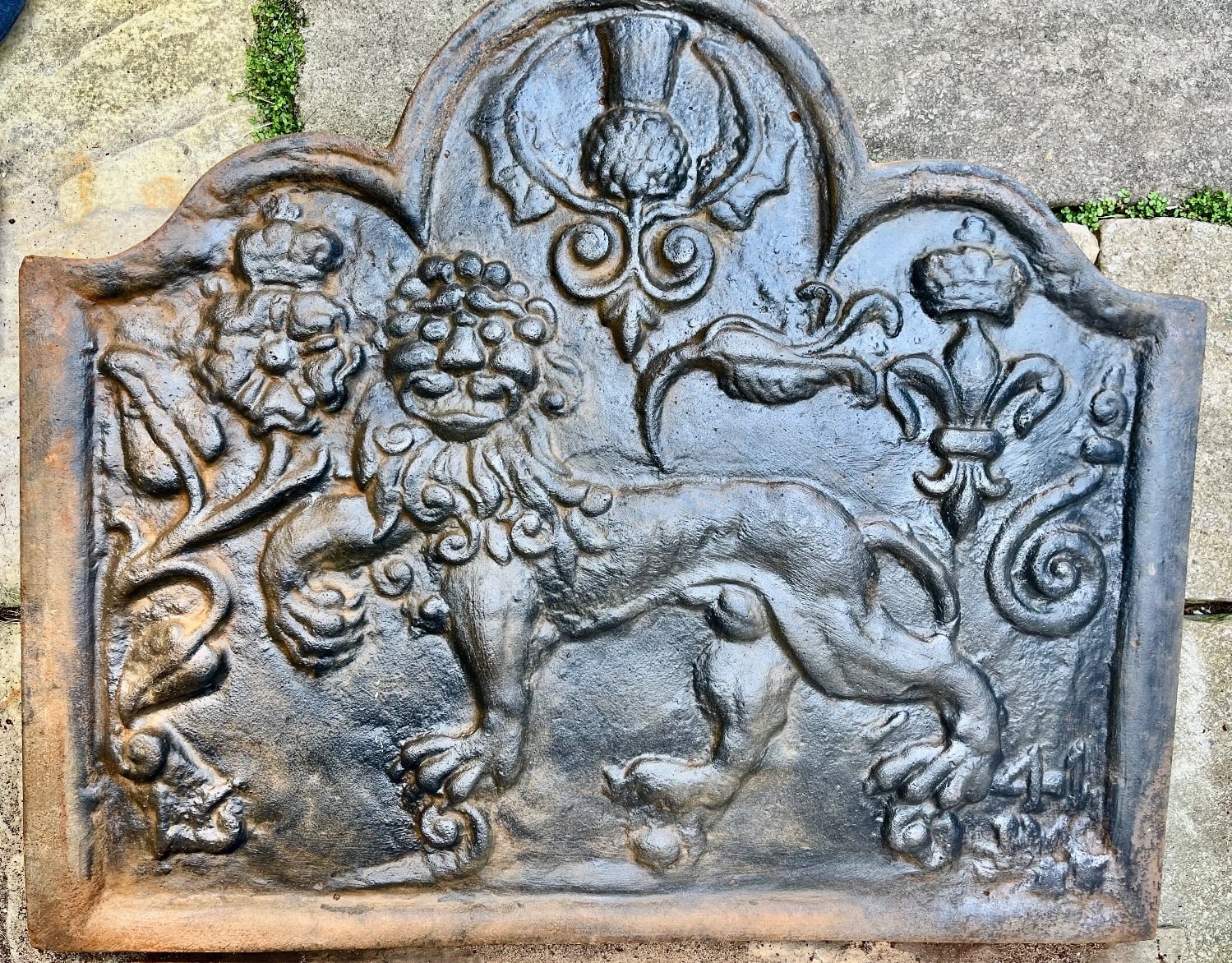
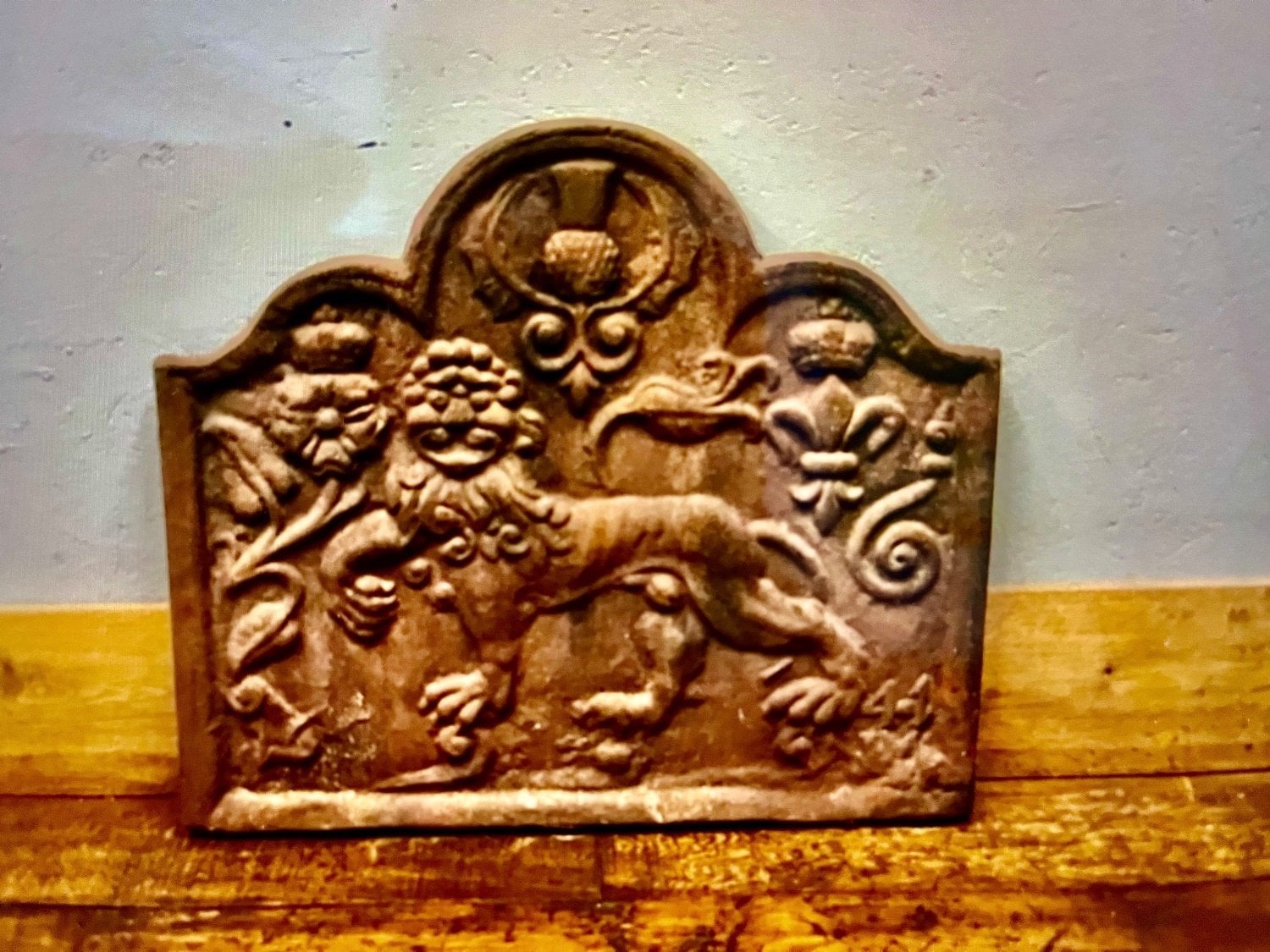
Rectangular plate, with an arched top and recessed lower edge, cast in relief with a Carolean lion passant gaurdant ,surrounded by the insignia of the realm: thistle, rose and fleur-de-lys of France in raised reliefs
Whilst this pattern has been copied over the years – with different variants to the same design having been cast, the earliest identified dates to 1641 and also in 1649 was produced in the Kent/Sussex Weald – possibly a foundry in Brede by a founder with the iniials “IM”. There is a casting of it in the Victoria and Albert Museum.dated 1649 The Weald – a centre of ironwork prior to the Industrial Revolution – produced a number of similarly Royalist themed firebacks during the Civil War, and after. They made cannons in the area
The Fire back is in excellent condition. The arched top has a large Scottish thistle in the centre. The national flower of Scotland and this prickly-leaved purple flower was first used in the 15th century as a symbol of defence. There is a large rose on the left hand side surmounted by a crown, most likely symbolising the White Rose of York which was later used as the badge of Jacobitism in England and Scotland. The heraldic rose shown here has a stylized form consisting of five symmetrical lobes, five barbs, and a circular seed. Here it most likely represents Charles I. There is a large fleur-de-lys on the upper right hand side surmounted by a crown, most likely symbolising the “Auld Alliance” which was based on a need, shared by Scotland and France, to contain English expansion. While the fleur-de-lis is particularly associated with the French monarchy and remains an enduring symbol of France. According to French historian Georges Duby, the three leaves represent the medieval social classes: those who worked, those who fought and those who prayed. Here is most likely represents Henrietta Maria, sister of Louis XIII who married Charles I in 1626. The magnificent "lion passant guardant" is walking, with the right fore paw raised and all others on the ground. The leopard or lion passant guardant is a frequently used charge in heraldry and mostly appears in groups of three, which are positioned over each another as in the arms of England. The symbol of a lion has been used as a heraldic device for many centuries by Scottish Kings although the Scottish lion has always been shown, on the royal shield, as being Rampant, The fireback is dated ‘1641’, the time of the ‘Bishops Wars. This series of civil wars engulfed England in the 1640s and 50s, and is known to modern historians as the Wars of the Three Kingdoms. The Covenanters who opposed the interference by the Stuart kings in the affairs of the Presbyterian Church of Scotland were governing Scotland. They raised a large army of their own and tried to impose their religious settlement on Episcopalians and Roman Catholics in the north of the country. Although this is dated 1641 I consider this listing to be a later reproduction in early-mid 20th century around .C 1860
This very very heavy solid iron casting will require three persons to manuvere ,it has been sealed and burnished with black grate polish on the reliefs to protect the casting reliefs
Dimensions are: Width: 75cm / 29.50''
Height: 66cm / 26''
Depth: 3cm / 1.25’'
Related ads
1 photo
For Sale
![Cast iron lurcher book ends 9 inches]()
![Cast iron lurcher book ends 9 inches]()
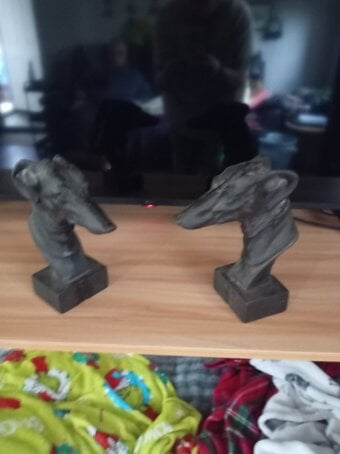
Cast iron lurcher book ends 9 inches
Brighton
£ 40/ week
9 photos
For Sale
![Buying & Selling]()
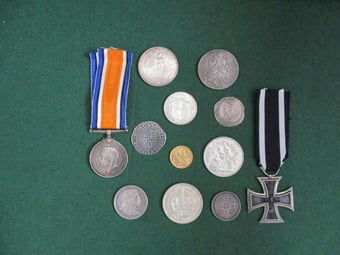
Buying & Selling
Maidstone
£ 5,000
7 photos
For Sale
![very old wheels full set with brarss nuts]() £ 250
£ 250
Cast iron lurcher book ends 9 inches
Buying & Selling